Stainless steel finishes play a critical role in modern architecture and design. While stainless steel itself is valued for its strength and corrosion resistance, the finish determines the final appearance, texture, and performance of the material.
From brushed and polished surfaces to decorative patterns and colored coatings, stainless steel finishes allow architects to combine functionality with visual impact.
What Is a Stainless Steel Finish?
A stainless steel finish refers to the surface treatment applied to the metal to achieve a specific texture or appearance. Finishes can be created through processes such as polishing, rolling, blasting, or coating.
The finish affects several important factors:
- Visual appearance
- Cleaning requirements
- Scratch resistance
- Durability
Common Stainless Steel Finishes Used in Architecture
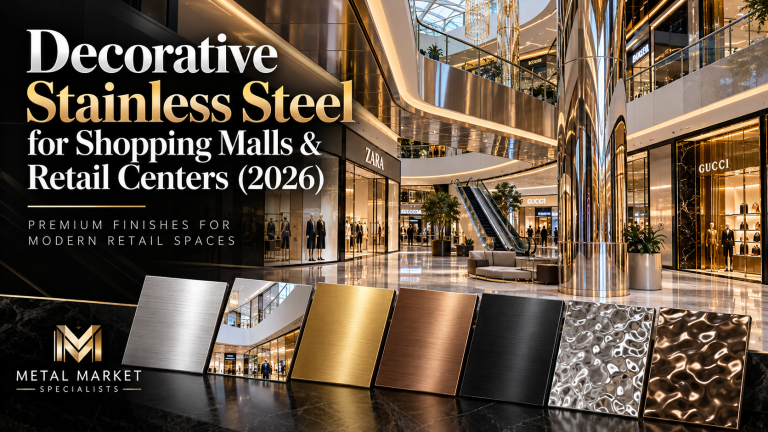
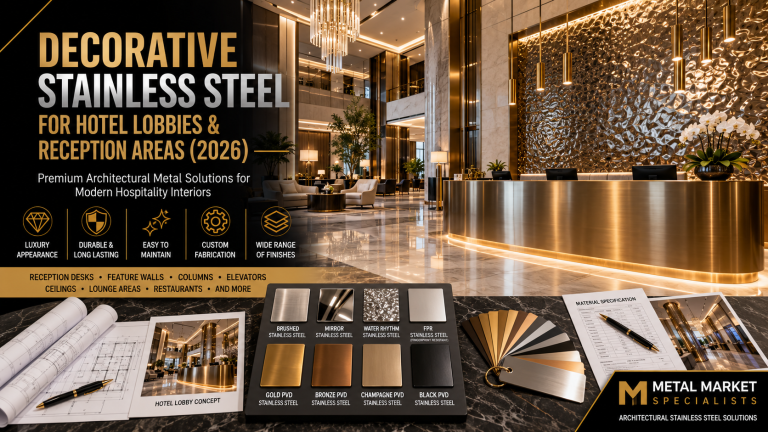
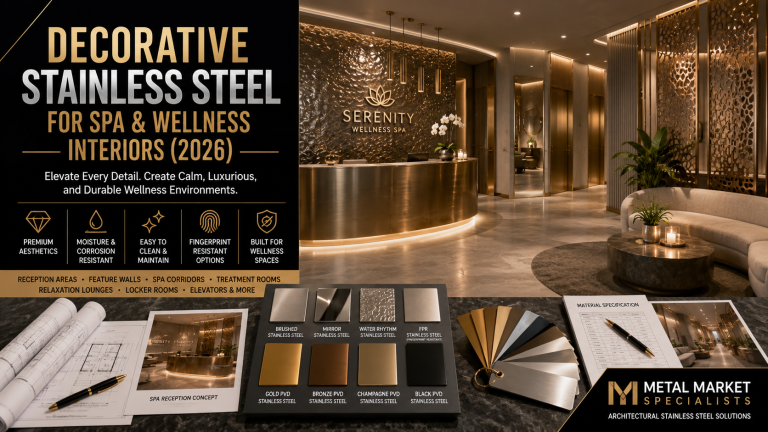
Brushed Stainless Steel
Brushed stainless steel features fine directional lines created by abrasive polishing. It produces a soft, satin-like appearance that is widely used in architectural applications.
Common uses include:
- Handrails
- Elevator panels
- Appliances
- Architectural trims
The subtle texture helps hide scratches and fingerprints better than smooth finishes.
Mirror Finish Stainless Steel
Mirror finish stainless steel is polished until it becomes highly reflective. This finish is ideal for projects that require a dramatic visual impact.
Applications include:
- Decorative wall panels
- Architectural cladding
- Luxury retail interiors
- Hotel lobby features
Decorative Stainless Steel
Decorative stainless steel includes embossed or patterned surfaces designed primarily for aesthetic purposes.
Common decorative patterns include:
- Geometric patterns
- Ripple textures
- Engine-turned finishes
- Custom architectural designs
Decorative stainless steel is frequently used in feature walls and high-end interior design projects.
Diamond Plate Stainless Steel
Diamond plate stainless steel features a raised diamond pattern that improves traction and durability.
This finish is commonly used in:
- Industrial flooring
- Staircases
- Vehicle panels
- Utility areas
Colored Stainless Steel
Colored stainless steel is produced using specialized coating processes that add a durable color layer to the metal surface.
Popular colors include:
- Gold
- Bronze
- Black
- Blue
- Rose
These finishes allow architects to create bold and visually striking designs without sacrificing durability.
Advantages of Stainless Steel Finishes
Longevity
Stainless steel resists corrosion and environmental damage, making it ideal for both interior and exterior architectural applications.
Hygiene
Smooth stainless steel finishes are easy to clean and widely used in hospitals, laboratories, and commercial kitchens.
Sustainability
Stainless steel is fully recyclable, making it an environmentally responsible building material.
Design Versatility
The wide variety of finishes available allows architects to achieve different visual styles ranging from industrial to luxury aesthetics.
Future Trends in Stainless Steel Design
The demand for decorative stainless steel continues to grow as architects experiment with new textures, colors, and surface treatments.
Emerging trends include:
- Water ripple stainless steel panels
- Laser-textured surfaces
- Colored stainless steel facades
- Custom architectural wall panels
Conclusion
Stainless steel finishes are an essential part of modern architecture. Whether polished, brushed, textured, or colored, each finish offers unique benefits that enhance both the appearance and performance of a project.
By understanding the different types of stainless steel finishes available, architects and designers can choose the ideal material to bring their creative vision to life.