Architectural stainless steel has become one of the most important materials in modern design. From luxury hotels and commercial buildings to airports and retail spaces, stainless steel is widely used for both structural and decorative purposes. Its combination of durability, corrosion resistance, and visual appeal makes it ideal for architectural projects.
What makes architectural stainless steel especially powerful in design is the wide variety of finishes available. Designers can choose mirror, polished, textured, colored, or fingerprint-resistant stainless steel depending on the aesthetic and performance requirements of the project.
What Is Architectural Stainless Steel?
Architectural stainless steel refers to stainless steel products designed for visible use in buildings where both appearance and durability matter. These materials combine structural strength with aesthetic flexibility, allowing architects to create modern and visually striking environments.
Common architectural applications include:
- Stainless steel wall panels
- Elevator interiors
- Exterior facades
- Column cladding
- Handrails and railings
- Decorative interior features
Because stainless steel resists corrosion and environmental damage, it can maintain its appearance for decades with minimal maintenance.
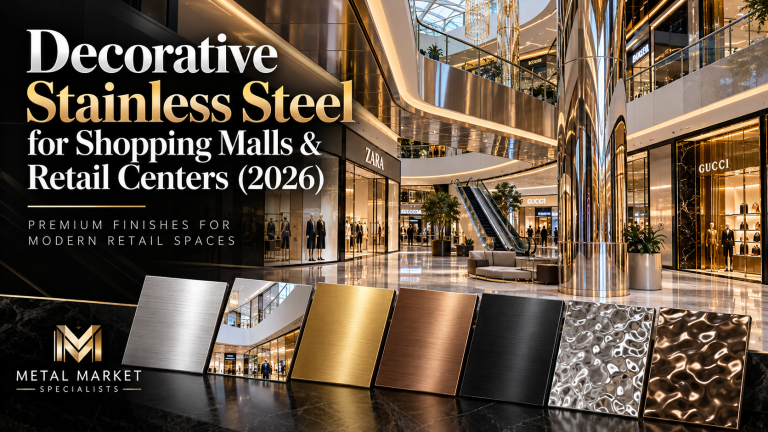
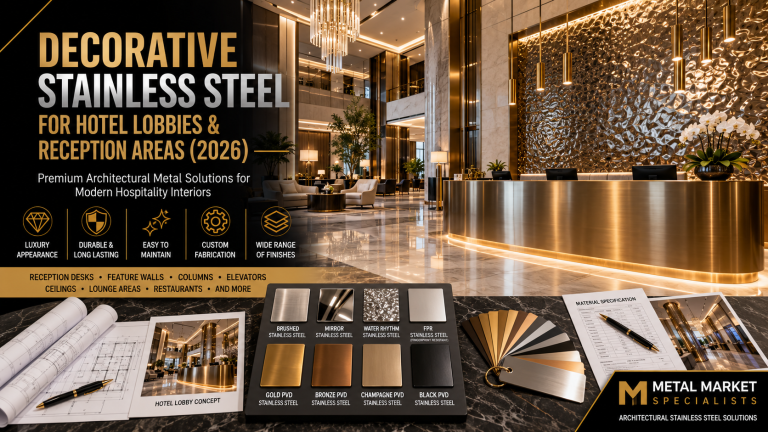
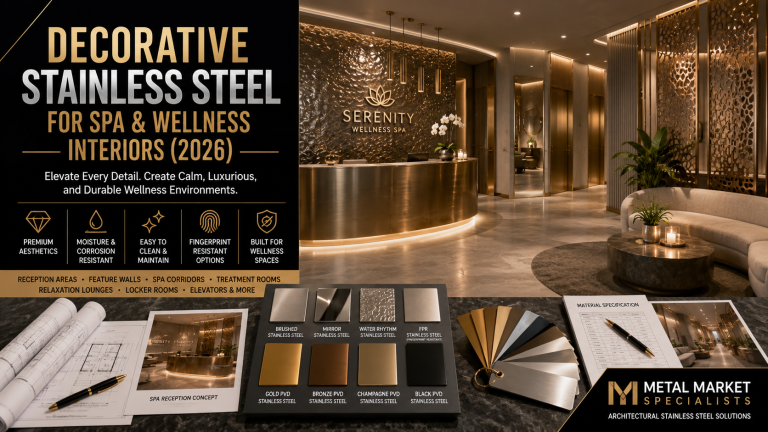
Popular Stainless Steel Finishes in Architecture
Polished Stainless Steel
Polished stainless steel is known for its smooth and reflective surface. It is created by grinding and buffing the metal using progressively finer abrasives to produce a bright finish.
Benefits of polished stainless steel include:
- Elegant and high-end appearance
- Easy cleaning and maintenance
- Light-reflective surface
This finish is often used in luxury interiors, decorative wall panels, and retail environments.
Mirror Stainless Steel
Mirror stainless steel, often referred to as a No.8 finish, is the most reflective stainless steel surface available. It is polished until no grain lines remain, producing a mirror-like effect.
Mirror stainless steel is commonly used for:
- Elevator doors
- Luxury retail interiors
- Decorative feature walls
- Architectural accents
This finish reflects light and can make interior spaces feel larger and more dynamic.
Textured Stainless Steel
Textured stainless steel introduces patterns or designs to the surface of the metal. These textures add depth and visual interest while also helping hide scratches and fingerprints.
Popular textures include:
- Linen patterns
- Water ripple designs
- Embossed surfaces
- Vibrational finishes
Because of their durability and visual appeal, textured finishes are frequently used in decorative architectural panels.
Colored Stainless Steel
Colored stainless steel is typically created using PVD coating technology, which adds a thin decorative layer to the metal surface.
Popular colors include:
- Gold stainless steel
- Bronze stainless steel
- Black stainless steel
- Blue stainless steel
- Champagne stainless steel
These finishes are widely used in luxury hotels, commercial buildings, and modern interior design projects.
Fingerprint Resistant Stainless Steel (FPR)
Fingerprint resistant stainless steel is designed for environments where surfaces are frequently touched. A special coating reduces visible smudges and makes cleaning easier.
This finish is commonly used in:
- Elevators
- Commercial kitchens
- Public buildings
- Architectural interior panels
Stainless Steel Wall Panels
Stainless steel wall panels are increasingly popular in modern architecture because they combine durability with a sleek appearance.
Advantages of stainless steel panels include:
- Modern and professional aesthetics
- Resistance to corrosion and moisture
- Low maintenance requirements
- Long-term durability
Architects often use these panels in commercial buildings, airports, and high-end residential spaces.
Why Architects Prefer Stainless Steel
Durability
Stainless steel is extremely resistant to corrosion, rust, and environmental damage.
Sustainability
Stainless steel is 100% recyclable, making it an environmentally responsible building material.
Design Flexibility
With a wide range of finishes and textures, stainless steel can match almost any architectural style.
Low Maintenance
Many stainless steel finishes resist fingerprints, stains, and scratches, making them ideal for high-traffic environments.
Conclusion
Architectural stainless steel is more than just a building material. It is a design element that combines strength, durability, and aesthetic versatility.
From polished and mirror finishes to textured and colored surfaces, stainless steel offers architects and designers endless possibilities. Whether used for wall panels, decorative features, or structural elements, architectural stainless steel continues to shape the future of modern design.