Transform your next commercial project with specialty stainless steel finishes that combine durability, aesthetics, and functionality
Architectural stainless steel has evolved far beyond basic wall panels and elevator trim. In 2026, designers and architects are pushing the boundaries of what decorative metal can achieve in commercial spaces, residential projects, and high-traffic public areas. Whether you’re specifying materials for a luxury hotel lobby, hospital corridor, or corporate headquarters, understanding the full potential of architectural metal sheets can elevate your design while solving practical challenges.
What Makes Architectural Stainless Steel Different from Standard Metal?
Standard stainless steel serves structural purposes. Architectural stainless steel transforms spaces.
The distinction lies in three critical factors:
Surface Quality and Consistency: Architectural-grade materials undergo rigorous quality control to ensure uniform appearance across large installations. Every sheet maintains consistent color, texture, and finish—essential when covering expansive wall surfaces or creating seamless design elements.
Specialized Finishes: While standard stainless steel typically comes in basic mill finish or brushed #4, architectural grades offer mirror finishes, embossed textures, colored PVD coatings, and fingerprint-resistant treatments. These specialty finishes serve both aesthetic and functional purposes.
Design-Driven Engineering: Architectural stainless steel balances visual impact with performance. Textured surfaces hide minor imperfections and resist scratches in high-traffic areas. Mirror finishes amplify natural light in interior spaces. Fingerprint-resistant coatings maintain pristine appearance with minimal maintenance.
Top 7 Applications Transforming Commercial Spaces
1. Elevator Interiors: The First Impression That Matters
Elevator cabs represent one of the most visible applications of architectural stainless steel. The confined space makes material choice critical—finishes must withstand constant touching, resist fingerprints, and maintain appearance despite daily wear.
Modern elevator design trends favor:
- Fingerprint-resistant hairline finishes that stay clean throughout the day
- Mirror surfaces that make small elevator cabs feel more spacious
- Colored stainless steel in bronze, champagne, or black for distinctive branding
- Textured patterns like linen, leather grain, or embossed designs that add visual interest
The elevator cab is where building visitors form their first impression of interior quality. Choosing the right architectural metal finish signals attention to detail and premium construction standards.
2. Feature Walls: Creating Architectural Focal Points
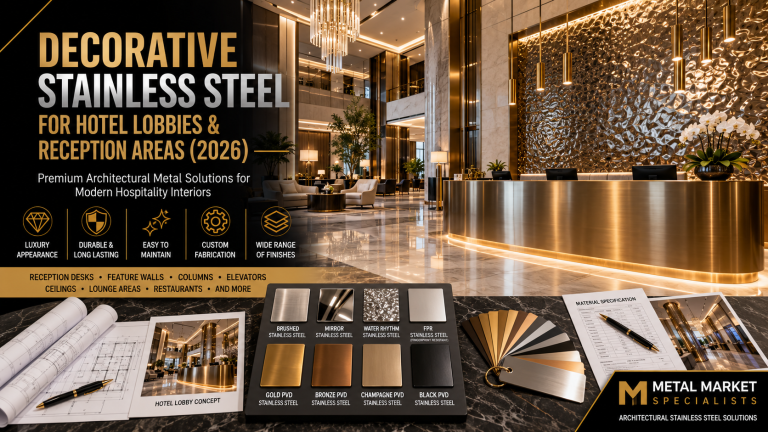
Decorative stainless steel panels create striking feature walls in lobbies, reception areas, and dining spaces. Unlike painted surfaces that chip and fade, architectural metal maintains its appearance for decades.
Water Rhythm patterns have gained particular popularity in high-end hospitality and corporate spaces. The flowing, wave-like texture catches light dynamically, creating visual movement that changes throughout the day. This specialty finish transforms a simple wall into an architectural statement.
Popular feature wall applications include:
- Hotel lobby accent walls behind reception desks
- Restaurant dining areas requiring dramatic visual impact
- Corporate office reception areas establishing brand identity
- Residential luxury condominiums in elevator lobbies and common areas
When properly illuminated, textured stainless steel creates depth and dimension impossible to achieve with flat materials. The three-dimensional quality adds sophistication while remaining remarkably low-maintenance.
3. Column Covers: Structural Elements Become Design Features
Exposed columns present both a challenge and an opportunity in commercial interiors. Architectural stainless steel transforms these necessary structural elements into design assets.
Embossed patterns work particularly well for column cladding:
- Diamond plate provides industrial-modern aesthetic in contemporary spaces
- Leather grain texture adds warmth and sophistication
- Linen patterns offer subtle elegance suitable for upscale environments
- Custom embossed designs can incorporate company branding or geometric motifs
The dimensional quality of textured finishes helps conceal minor installation variations while adding visual interest to otherwise plain vertical surfaces. Column covers fabricated from architectural stainless steel require minimal maintenance and resist the scuffs and dents common in high-traffic areas.
4. Commercial Kitchen Environments: Where Function Meets Regulation
In food service, healthcare, and pharmaceutical environments, stainless steel serves critical functional purposes beyond aesthetics. Health codes require cleanable, non-porous surfaces that resist bacterial growth and withstand rigorous sanitation protocols.
Specialty stainless steel finishes excel in commercial kitchens:
- Fingerprint-resistant coatings maintain clean appearance despite constant touching
- Polished surfaces facilitate easy cleaning and sanitation
- Corrosion-resistant grades (like 316) withstand harsh cleaning chemicals
- Seamless installations eliminate crevices where bacteria could hide
Restaurant designers increasingly specify architectural-grade stainless steel for visible kitchen areas, serving stations, and bar fronts. The material communicates cleanliness and professionalism while meeting health department requirements.
5. Retail Displays and Store Fixtures: Premium Brand Positioning
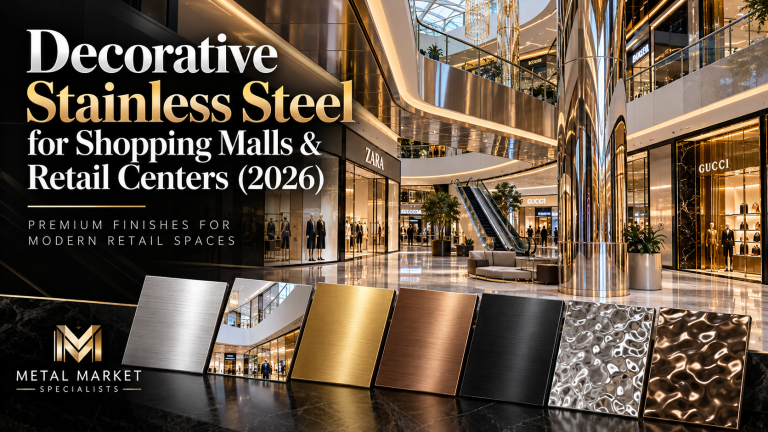
Luxury retail environments use decorative stainless steel to communicate brand values and product quality. The material’s reflective properties, durability, and modern aesthetic align with premium positioning strategies.
Mirror and colored finishes dominate retail applications:
- Jewelry stores use mirror stainless steel to enhance product sparkle
- Fashion boutiques incorporate champagne or rose gold tones matching brand colors
- Technology retailers favor brushed textures conveying precision and innovation
- Cosmetics counters utilize fingerprint-resistant surfaces maintaining perfect appearance
Display fixtures, wall systems, and checkout counters fabricated from architectural metal create cohesive design statements that reinforce brand identity while withstanding the wear of daily customer interaction.
6. Healthcare Facilities: Durability Meets Infection Control
Hospitals, medical offices, and surgical centers specify architectural stainless steel for wall protection, door frames, and high-traffic corridor applications. The material’s non-porous surface prevents bacterial growth while resisting impact damage from gurneys, wheelchairs, and equipment.
Textured finishes prove particularly valuable in healthcare:
- Hide scuffs and scratches common in busy corridors
- Provide slip-resistant quality when used for thresholds and ramps
- Maintain professional appearance despite constant cleaning
- Eliminate the need for frequent repainting or refinishing
Medical facilities benefit from stainless steel’s long service life and low total cost of ownership. While initial material costs exceed painted walls, the elimination of ongoing maintenance and replacement delivers significant lifecycle savings.
7. Exterior Cladding and Facades: Weather-Resistant Beauty
Architectural stainless steel excels in exterior applications where weather resistance and longevity matter. The material withstands extreme temperatures, UV exposure, and corrosive environments without degrading or requiring protective coatings.
Mirror and colored finishes create dramatic exterior statements:
- Building entrances benefit from reflective surfaces that create visual impact
- Canopy systems use polished stainless steel to amplify natural light
- Accent panels in contrasting finishes define architectural features
- Screen systems provide privacy while maintaining airflow
For coastal environments or areas with harsh weather, grade 316 stainless steel provides superior corrosion resistance. The material’s self-healing chromium oxide layer continuously protects against rust and degradation.
Choosing the Right Stainless Steel Finish for Your Project
Match Finish to Function
Different environments demand different finishes:
High-Touch Areas (elevator buttons, door handles, railings):
- Fingerprint-resistant coatings essential
- Textured surfaces hide wear better than smooth finishes
- Consider antimicrobial treatments for healthcare applications
Visual Impact Zones (lobbies, feature walls, retail displays):
- Mirror finishes maximize light reflection
- Colored PVD coatings create brand-aligned aesthetics
- Water Rhythm or embossed textures add dimensional interest
Heavy Traffic Corridors (hospitals, schools, airports):
- Embossed or textured patterns conceal damage
- Brushed finishes more forgiving than polished surfaces
- Grade 304 provides adequate durability for most interior applications
Exterior Applications (facades, canopies, architectural screens):
- Grade 316 necessary for coastal or industrial environments
- Consider local climate and pollution levels
- Verify finish warranty for outdoor exposure
Understanding Stainless Steel Grades
304 Stainless Steel: The workhorse of architectural applications. Contains 18% chromium and 8% nickel, providing excellent corrosion resistance for interior use and most exterior environments. Cost-effective and readily available in all specialty finishes.
316 Stainless Steel: Superior corrosion resistance due to added molybdenum content. Essential for coastal areas, industrial environments, or anywhere exposed to salt, chemicals, or extreme conditions. Slightly higher cost justified by extended service life.
430 Stainless Steel: Lower nickel content makes it more economical but less corrosion-resistant. Suitable for interior decorative applications where aesthetic quality matters more than extreme durability. Not recommended for high-moisture environments.
Maintenance Requirements: Less Than You Think
One of architectural stainless steel’s greatest advantages is minimal maintenance compared to painted surfaces, wood veneer, or other wall covering materials.
Regular Cleaning:
- Fingerprint-resistant finishes: Wipe with microfiber cloth and water
- Mirror and polished surfaces: Use stainless steel cleaner and soft cloth
- Textured patterns: Occasional cleaning with mild detergent solution
- Exterior applications: Periodic washing removes environmental deposits
No Refinishing Required: Unlike painted walls requiring periodic repainting or wood requiring refinishing, architectural stainless steel maintains its appearance for decades without professional restoration. This dramatically reduces lifecycle maintenance costs.
Damage Repair: Minor scratches can be professionally buffed out. Unlike other materials, stainless steel doesn’t chip, crack, or delaminate. Deep scratches may require panel replacement, but localized damage doesn’t spread or compromise surrounding material.
Why Specialty Finishes Matter More Than Ever
Generic architectural stainless steel serves basic functional needs. Specialty finishes elevate projects from adequate to exceptional.
Fingerprint-Resistant Technology: Modern anti-fingerprint coatings use nano-particle technology to repel oils and moisture. Surfaces maintain pristine appearance in high-touch environments without constant cleaning. This matters enormously in elevator cabs, door systems, and public touchpoints.
Colored PVD Coatings: Physical Vapor Deposition creates permanent colored finishes in gold, bronze, black, champagne, and custom hues. Unlike painted surfaces, PVD coatings bond at molecular level and won’t chip, peel, or fade. Designers can match corporate colors or create accent elements while maintaining stainless steel’s durability.
Water Rhythm and Custom Textures: Proprietary patterns like Water Rhythm create unique visual signatures impossible to replicate with standard materials. Custom embossing allows brand-specific designs, logos, or geometric patterns integrated directly into metal surfaces.
Real-World Project Considerations
Budget Planning
Architectural stainless steel represents higher upfront material cost than painted drywall or laminate finishes. However, lifecycle cost analysis reveals different economics:
- No repainting every 5-7 years
- No replacement due to denting, scratching, or wear
- Minimal maintenance labor and materials
- Higher property value and rent premiums for premium finishes
Calculate total cost of ownership over 20-year building lifecycle rather than focusing solely on initial installation expense.
Lead Times
Specialty finishes require production planning:
- Standard patterns: 2-4 weeks for most architectural products
- Custom colors or textures: 6-8 weeks for PVD coating processes
- Large volume orders: Plan 8-12 weeks for major projects
- Sample approval: Always order physical samples before final specification
Installation Expertise
Work with fabricators and installers experienced in architectural metal:
- Proper substrate preparation essential for flat, professional appearance
- Specialized adhesives and mounting systems prevent warping
- Seamless installations require precise cutting and alignment
- Protective films must remain in place until project completion
The Future of Architectural Stainless Steel
Material innovation continues advancing what’s possible with decorative metal:
Antimicrobial Surfaces: Copper-infused stainless steel actively kills bacteria on contact—critical for healthcare environments post-pandemic.
Smart Glass Integration: Combining architectural metal with electrochromic glass creates dynamic facades responding to light and temperature.
Sustainable Manufacturing: Recycled content exceeding 60% makes stainless steel one of the most environmentally responsible building materials available.
Digital Fabrication: Laser cutting and CNC machining enable intricate patterns and custom designs previously impossible at scale.
Conclusion: Material Selection That Matters
Architectural stainless steel represents more than surface covering—it’s a strategic design decision affecting building performance, maintenance costs, and user experience for decades. The material’s unique combination of durability, aesthetic versatility, and minimal maintenance makes it increasingly relevant in modern construction.
Whether specifying materials for elevator interiors, feature walls, column covers, or exterior cladding, understanding the full range of specialty finishes available transforms architectural stainless steel from basic necessity to design opportunity. The right finish in the right application elevates projects while solving practical challenges related to maintenance, durability, and user satisfaction.
For architects, designers, and building owners seeking materials that perform as beautifully as they look, architectural stainless steel with specialty finishes delivers unmatched value across the building lifecycle.
Ready to explore specialty stainless steel finishes for your next project? Request physical samples to experience the quality difference of architectural-grade materials with advanced surface treatments.